

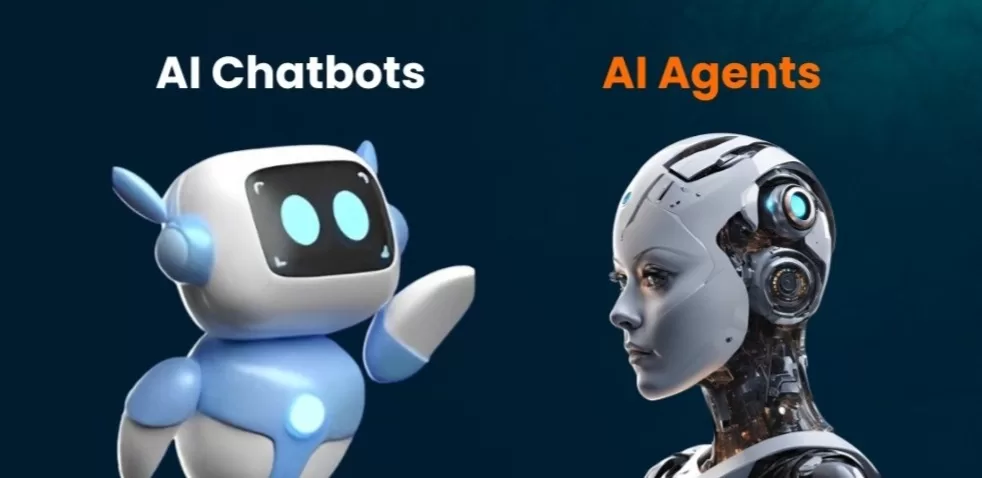
In 2025, artificial intelligence (AI) is revolutionizing how businesses operate, with AI agents and AI chatbots leading the charge. Whether you’re a small business owner aiming to improve customer service or an enterprise leader seeking advanced automation, understanding the differences between AI agents and chatbots is critical. This comprehensive guide explores their capabilities, industry use cases, and how to choose the right solution for your business. Let’s dive into the world of AI to help you make an informed decision and boost your business efficiency.
What Are AI Chatbots and AI Agents?
AI Chatbots: Your Conversational Workhorse
AI chatbots are software tools powered by natural language processing (NLP) that engage users through text or voice interactions. Designed for specific, often repetitive tasks, chatbots excel at providing quick answers, guiding users, or automating customer-facing processes.
- Key Features:
- Respond to FAQs and handle basic inquiries.
- Integrate with platforms like websites, WhatsApp, or Slack.
- Offer 24/7 availability for seamless customer support.
- Use predefined scripts or simple ML models for responses.
- Example: A retail chatbot answering “Where’s my order?” or recommending products based on user queries.
AI Agents: The Next-Level Automation Powerhouse
AI agents are advanced, autonomous systems that go beyond conversation to perform complex tasks, make decisions, and learn from data. Built on cutting-edge AI models like large language models (LLMs), they handle multi-step processes and integrate deeply with business systems.
- Key Features:
- Contextual reasoning and proactive problem-solving.
- Integration with CRMs, ERPs, or IoT for end-to-end automation.
- Ability to adapt to dynamic environments and user needs.
- Multi-agent collaboration for complex workflows.
- Example: An AI agent optimizing a supply chain by predicting demand and adjusting inventory in real-time.
Why AI Matters for Businesses in 2025
The global AI chatbot market is expected to hit $19.6 billion by 2027, while the AI agent market is growing even faster due to its versatility (source: Statista). Businesses across industries are adopting these technologies to reduce costs, enhance customer experiences, and stay competitive. Search trends show users frequently look for “AI chatbot benefits,” “AI agents for automation,” and “AI use cases in [industry],” indicating a strong demand for clear, actionable insights.
Current Trends in AI Technology
- Generative AI: Tools like Grok (by xAI) power advanced chatbots and agents with human-like reasoning.
- Low-Code Platforms: Solutions like Dialogflow or Microsoft Bot Framework make chatbot deployment accessible.
- Hyper-Personalization: AI leverages customer data for tailored experiences, boosting engagement.
- Autonomous Systems: AI agents now handle multi-step processes, from lead generation to predictive analytics.
Industry-Specific Use Cases for AI Chatbots and Agents
AI chatbots and agents shine in various industries, addressing unique challenges and delivering measurable results. Below are the top verticals, their applications, how AI revolutionizes traditional methods, and the qualitative ROI, optimized for search terms like “AI chatbot use cases” and “AI agents in [industry].”
1. E-Commerce and Retail
- AI Chatbots:
- Customer Support:
- Use Case: Answer queries about shipping, returns, or product details.
- Revolutionizing Traditional Methods: Unlike human support teams limited by working hours and capacity, chatbots provide instant, 24/7 responses, reducing wait times and handling high query volumes.
- Qualitative ROI: Increases customer satisfaction by resolving issues quickly, reduces support costs by automating up to 80% of routine inquiries, and frees staff for complex tasks.
- Product Recommendations:
- Use Case: Suggest items based on browsing history or preferences.
- Revolutionizing Traditional Methods: Replaces generic marketing emails with real-time, personalized suggestions, leveraging AI to analyze user behavior dynamically.
- Qualitative ROI: Boosts conversion rates by up to 30% through tailored recommendations, enhances customer loyalty, and increases average order value.
- Cart Recovery:
- Use Case: Send reminders to reduce cart abandonment rates.
- Revolutionizing Traditional Methods: Automates follow-ups compared to manual email campaigns, using real-time data to time reminders effectively.
- Qualitative ROI: Recovers 10-15% of abandoned carts, directly increasing revenue and improving customer retention.
- Customer Support:
- AI Agents:
- Inventory Optimization:
- Use Case: Forecast demand and automate restocking.
- Revolutionizing Traditional Methods: Replaces manual inventory tracking with predictive analytics, reducing stockouts and overstocking through real-time data analysis.
- Qualitative ROI: Cuts inventory costs by up to 25%, minimizes lost sales due to stockouts, and streamlines operations.
- Dynamic Pricing:
- Use Case: Adjust prices based on market trends and competition.
- Revolutionizing Traditional Methods: Automates pricing strategies, unlike static pricing models, by analyzing competitor data and demand in real-time.
- Qualitative ROI: Increases profit margins by 5-10%, enhances competitiveness, and optimizes revenue streams.
- Customer Journey Analysis:
- Use Case: Personalize marketing campaigns using behavioral data.
- Revolutionizing Traditional Methods: Moves beyond generic campaigns to hyper-personalized strategies, using AI to map customer journeys and predict preferences.
- Qualitative ROI: Improves campaign ROI by 20-30%, strengthens customer engagement, and reduces marketing waste.
- Inventory Optimization:
2. Healthcare
- AI Chatbots:
- Symptom Checkers:
- Use Case: Guide patients through initial diagnostics.
- Revolutionizing Traditional Methods: Replaces lengthy phone calls or in-person triage with instant, accessible symptom assessments, reducing strain on healthcare staff.
- Qualitative ROI: Enhances patient access to care, reduces triage time by up to 50%, and lowers operational costs for clinics.
- Appointment Management:
- Use Case: Schedule and reschedule appointments effortlessly.
- Revolutionizing Traditional Methods: Automates scheduling compared to manual call centers, offering 24/7 booking and reducing no-shows.
- Qualitative ROI: Saves administrative time by 30-40%, improves patient satisfaction, and optimizes resource utilization.
- Patient Engagement:
- Use Case: Send reminders for medication or follow-ups.
- Revolutionizing Traditional Methods: Replaces manual outreach with automated, personalized reminders, ensuring consistent patient communication.
- Qualitative ROI: Increases medication adherence by 20%, reduces missed appointments, and enhances patient outcomes.
- Symptom Checkers:
- AI Agents:
- Medical Data Insights:
- Use Case: Analyze patient records for trends or risk factors.
- Revolutionizing Traditional Methods: Automates data analysis, unlike manual chart reviews, identifying patterns across large datasets quickly.
- Qualitative ROI: Improves diagnostic accuracy, reduces analysis time by 60%, and supports proactive care.
- Clinical Support:
- Use Case: Provide doctors with evidence-based recommendations.
- Revolutionizing Traditional Methods: Enhances decision-making with real-time insights, unlike reliance on manual research or static guidelines.
- Qualitative ROI: Boosts treatment accuracy, saves physicians’ time, and improves patient trust.
- Resource Optimization:
- Use Case: Streamline hospital staffing and equipment allocation.
- Revolutionizing Traditional Methods: Replaces manual scheduling with predictive models, optimizing resources based on patient flow and demand.
- Qualitative ROI: Reduces operational costs by 15-20%, improves staff efficiency, and enhances patient care delivery.
- Medical Data Insights:
3. Financial Services
- AI Chatbots:
- Account Inquiries:
- Use Case: Provide instant responses to balance or transaction questions.
- Revolutionizing Traditional Methods: Eliminates long wait times for call center support, offering instant answers via chat interfaces.
- Qualitative ROI: Reduces support costs by 50%, improves customer satisfaction, and frees staff for complex queries.
- Fraud Detection:
- Use Case: Alert users to suspicious activities in real-time.
- Revolutionizing Traditional Methods: Automates monitoring, unlike manual reviews, detecting anomalies faster with AI algorithms.
- Qualitative ROI: Decreases fraud losses by 30-40%, enhances customer trust, and reduces manual oversight.
- Loan Assistance:
- Use Case: Guide customers through application processes.
- Revolutionizing Traditional Methods: Streamlines applications compared to paper-based or manual processes, guiding users step-by-step.
- Qualitative ROI: Speeds up loan processing by 40%, improves customer experience, and increases approval rates.
- Account Inquiries:
- AI Agents:
- Risk Analysis:
- Use Case: Evaluate credit or investment risks autonomously.
- Revolutionizing Traditional Methods: Automates risk assessment, replacing manual analysis with real-time data processing.
- Qualitative ROI: Improves risk prediction accuracy, reduces defaults by 20%, and speeds up decision-making.
- Automated Trading:
- Use Case: Execute trades based on real-time market data.
- Revolutionizing Traditional Methods: Replaces human traders with AI-driven strategies, reacting to market changes instantly.
- Qualitative ROI: Increases trading efficiency, maximizes returns by 10-15%, and reduces human error.
- Compliance Automation:
- Use Case: Monitor transactions for regulatory adherence.
- Revolutionizing Traditional Methods: Automates compliance checks, unlike manual audits, ensuring real-time adherence.
- Qualitative ROI: Cuts compliance costs by 25%, reduces regulatory risks, and enhances audit efficiency.
- Risk Analysis:
4. Manufacturing and Supply Chain
- AI Chatbots:
- Supplier Communication:
- Use Case: Handle routine vendor queries.
- Revolutionizing Traditional Methods: Automates email or phone-based communication, providing instant responses to suppliers.
- Qualitative ROI: Saves 30% of communication time, improves supplier relationships, and reduces manual effort.
- Order Tracking:
- Use Case: Provide real-time shipment updates.
- Revolutionizing Traditional Methods: Replaces manual tracking updates with automated, customer-facing interfaces.
- Qualitative ROI: Enhances transparency, reduces inquiry volume by 40%, and improves customer satisfaction.
- Supplier Communication:
- AI Agents:
- Supply Chain Efficiency:
- Use Case: Predict demand and optimize logistics.
- Revolutionizing Traditional Methods: Replaces static forecasting with dynamic, AI-driven models, optimizing supply chains in real-time.
- Qualitative ROI: Reduces logistics costs by 20%, minimizes delays, and improves delivery reliability.
- Predictive Maintenance:
- Use Case: Monitor equipment to prevent downtime.
- Revolutionizing Traditional Methods: Shifts from scheduled maintenance to predictive models, using IoT data to anticipate failures.
- Qualitative ROI: Cuts downtime by 30-50%, extends equipment life, and reduces repair costs.
- Quality Assurance:
- Use Case: Detect defects using real-time data analysis.
- Revolutionizing Traditional Methods: Automates inspections, replacing manual checks with AI-driven anomaly detection.
- Qualitative ROI: Improves defect detection by 25%, reduces waste, and enhances product quality.
- Supply Chain Efficiency:
5. Education
- AI Chatbots:
- Student Support:
- Use Case: Answer questions about courses, schedules, or enrollment.
- Revolutionizing Traditional Methods: Replaces manual help desks with 24/7 chat support, reducing wait times for students.
- Qualitative ROI: Saves administrative time by 40%, improves student satisfaction, and scales support capacity.
- Language Tutoring:
- Use Case: Offer interactive language practice sessions.
- Revolutionizing Traditional Methods: Provides on-demand tutoring, unlike fixed class schedules, with personalized feedback.
- Qualitative ROI: Enhances learning outcomes by 20%, increases accessibility, and reduces tutoring costs.
- Student Support:
- AI Agents:
- Adaptive Learning:
- Use Case: Create personalized study plans based on student performance.
- Revolutionizing Traditional Methods: Replaces one-size-fits-all curricula with tailored learning paths, adapting to individual needs.
- Qualitative ROI: Improves student performance by 15-20%, boosts engagement, and reduces dropout rates.
- Administrative Automation:
- Use Case: Streamline grading, admissions, or resource allocation.
- Revolutionizing Traditional Methods: Automates repetitive tasks, unlike manual administrative processes, freeing staff for strategic roles.
- Qualitative ROI: Reduces administrative costs by 30%, improves efficiency, and enhances institutional scalability.
- Adaptive Learning:
AI Chatbots vs. AI Agents: Key Differences
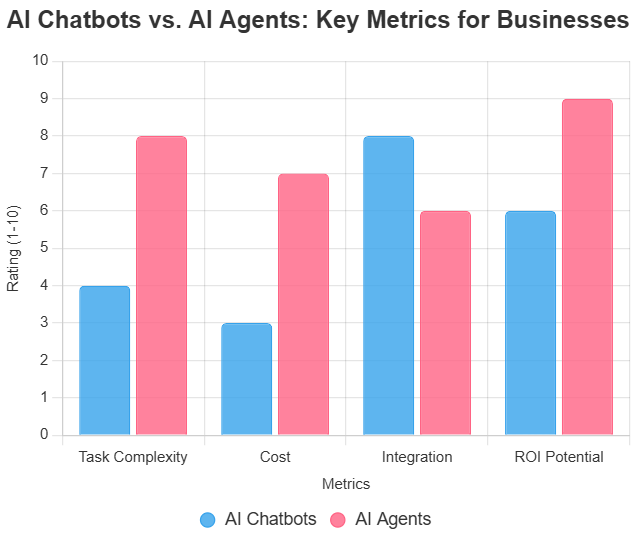
| Feature | AI Chatbots | AI Agents |
|---|---|---|
| Primary Function | Conversational tasks | Autonomous, multi-step tasks |
| Complexity | Simple, rule-based | Complex, adaptive reasoning |
| Integration | Websites, messaging apps | CRMs, ERPs, IoT systems |
| Use Case Examples | FAQs, scheduling | Supply chain, data analysis |
| Cost | Low to moderate | Higher, with greater ROI |
| Scalability | High for customer-facing tasks | High for enterprise workflows |
How to Choose the Right AI Solution for Your Business
Selecting between an AI chatbot and an AI agent depends on your business needs, budget, and technical capabilities. Here’s a step-by-step guide to help you decide, optimized for searches like “how to choose AI for business.”
1. Identify Your Goals
- Chatbots: Best for high-volume, repetitive tasks like customer support or lead capture.
- AI Agents: Suited for strategic tasks like process automation, predictive analytics, or complex decision-making.
2. Assess Integration Needs
- Chatbots: Easily integrate with platforms like Shopify, Zendesk, or Slack, ideal for small to medium businesses.
- AI Agents: Require robust infrastructure but offer deep integration with enterprise tools like Salesforce or SAP.
3. Consider Budget and ROI
- Chatbots: Cost-effective with quick deployment, perfect for businesses with limited budgets.
- AI Agents: Higher upfront costs but deliver long-term savings through automation and insights.
4. Prioritize Customer Experience
- Chatbots: Provide instant responses, improving customer satisfaction for routine queries.
- AI Agents: Enable hyper-personalized experiences and proactive solutions, boosting retention.
5. Evaluate Industry Requirements
- Chatbots: Ideal for customer-facing industries like retail or hospitality.
- AI Agents: Perfect for data-driven sectors like healthcare, finance, or manufacturing.
Implementation Tips
To ensure your AI solution delivers value and ranks well in searches like “AI chatbot best practices” or “AI agent implementation,” follow these tips:
- Set Clear KPIs: Measure success through metrics like response time, customer satisfaction, or cost savings.
- Leverage Data: Use customer and operational data to train AI for better accuracy.
- Ensure Scalability: Choose platforms that grow with your business.
- Focus on UX: Design intuitive interfaces and seamless handoffs to human agents.
- Monitor Performance: Use analytics to refine AI responses and functionality.
- Stay Compliant: Adhere to data privacy laws like GDPR or CCPA.
Why Invest in AI Now?
With search trends showing growing interest in “AI for small business” and “enterprise AI solutions,” 2025 is the perfect time to adopt AI. Chatbots offer quick wins for customer engagement, while AI agents drive transformative automation. By aligning your choice with your business goals, you can enhance efficiency, reduce costs, and stay ahead of the competition.
Ready to Transform Your Business with AI?
Whether you’re looking to deploy a customer service chatbot or an AI agent for automation, our IT services team can help. We specialize in tailored AI solutions that align with your industry and goals. Contact us today to explore how AI can elevate your business, or visit our website for more insights on AI chatbot development and AI agent solutions.
Let’s build the future of your business with AI—schedule a consultation now!